Aloha POS Capabilities and Limitations for Small Restaurants
Aloha POS costs far more than small restaurants actually need to pay for what they use.
Aloha POS runs more restaurants than almost any other system on the planet, tens of thousands of them, but the platform was built for chains like Applebee's and Outback Steakhouse, not the 40-seat spot on the corner with one location and a part-time bookkeeper. That mismatch explains almost everything about the system: why it delights some operators and frustrates others for reasons that have nothing to do with bugs or bad luck. And it points toward a conclusion worth stating up front, since the rest of this piece will spend its time arguing for it: most small independents who buy Aloha are buying more system than they need, and paying enterprise prices to get it.
The company's history reads like a corporate family tree that keeps getting adopted out. Aloha Technologies built the thing, Radiant Systems bought it, then NCR (the old National Cash Register company) bought Radiant. NCR split into NCR Voyix, which handles restaurants and retail, and NCR Atleos, which handles ATMs. NCR Voyix sold off its digital banking division in August 2024 for $2.45 billion, a bet on restaurants and retail as the real business, and brought on a new CEO, James Kelly, in February 2025. None of that is trivia. It's the reason Aloha now ships as two genuinely different products: Aloha Essentials, the Windows-based, hybrid on-premise system built for high-volume, multi-location chains, and Aloha Cloud, an Android-based SaaS product aimed at independents and smaller multi-location operators. Softabase scores the platform 7.2 out of 10 across roughly 3,500 reviews, and names its ideal customer outright: national chains with 50 or more locations. A single-location diner was never the customer this system was drawn up for, and every strength or shortcoming a small operator runs into traces back to that fact.
Where Aloha genuinely performs well
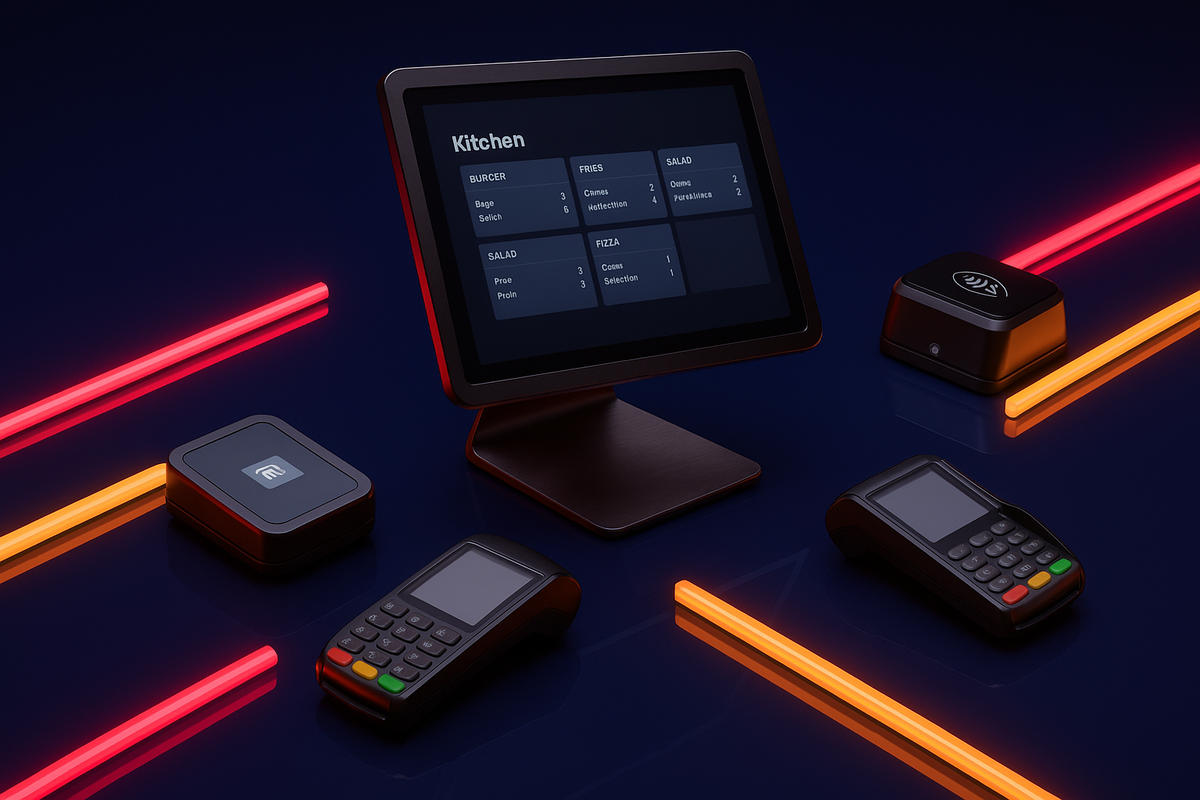
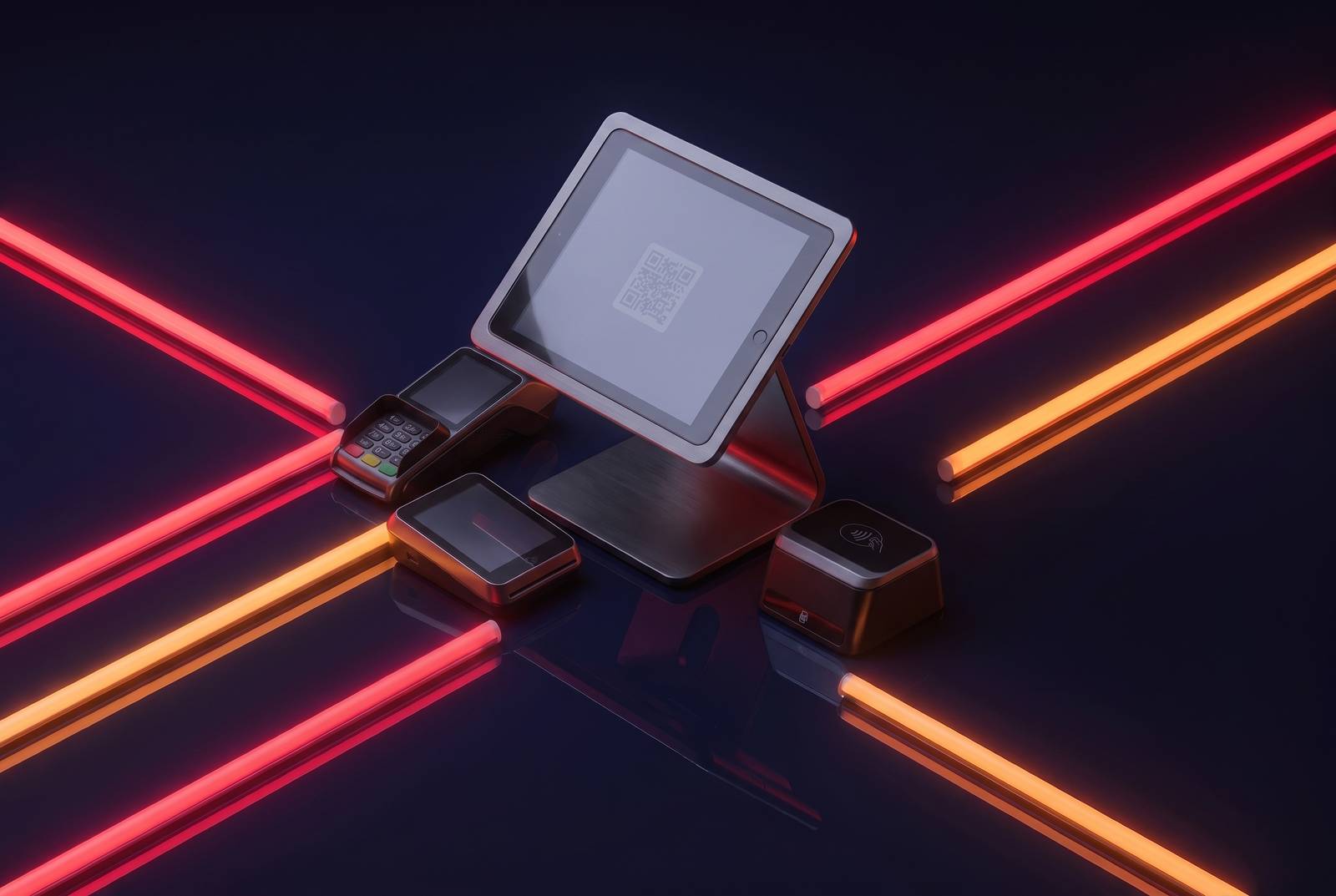
Start with the hardware, since it's the least glamorous strength and the most durable one. NCR's terminals are built to survive grease, heat, spilled soda, and a Saturday dinner rush where every screen gets jabbed a few hundred times. Set that against a consumer tablet propped up on a stand, and the gap doesn't show up in the demo. It shows up later, when hardware wear compounds over time in ways a controlled sales environment never reveals.
Offline mode matters more than most sales conversations let on. When the internet drops, and at some point it will drop, Aloha keeps taking orders and processing payments without missing a beat. For a restaurant mid-rush, that's the difference between a manageable hiccup and a night of handwritten tickets and tables that ordered forty minutes ago and are starting to notice.
Inventory tracking runs in real time, with automated stock alerts, and Reported figures put food waste reduction at around 10% through automated stock management and intelligent alerts. On restaurant margins that thin, that's not a rounding error, that's the difference between a good month and a break-even one. Staff familiarity is a quieter advantage: more restaurant workers have trained on Aloha than on any competing system, so hiring someone with prior POS experience often means hiring someone who already knows this one cold.
The enterprise ecosystem is where Aloha shows its scale-built bones most clearly. It connects into NCR's wider stack: online ordering, loyalty, kiosks, drive-thru, kitchen automation, plus established integrations with major food distributors, accounting software, and franchise management tools. For a multi-location operator, one vendor covering the whole stack is a real convenience. Aloha Cloud specifically earns praise from reviewers at The Retail Exec for its clean interface, order management, and real-time reporting. The analytics run deep, too: filters by server, location, daypart, menu item, and enterprise reporting built for franchise structures.
All of that is real, none of it dreamed up for a sales deck. But look at the pattern: durability, offline reliability, ecosystem depth, franchise-grade reporting. These are strengths that compound with scale. A single location with four terminals gets a smaller version of all of it, at a price built for something much bigger, and that's the whole story of what goes wrong for that operator.
The cost structure small restaurants actually face
This is where the two product lines split hard, and where a small operator needs to read the fine print before signing anything.
Aloha Essentials is priced like enterprise software, because it is enterprise software. Per Softabase, hardware terminals run $5,000 to $15,000 each, though other sources put the range closer to $2,400 to $5,000 depending on setup. Kitchen display screens add $800 to $1,200. Installation and training aren't optional, and they run $3,000 to $5,000. Then the recurring bills start: $79 to $125 per terminal per month in licensing, $99 to $199 a month for support, and 2.6% on every card-present transaction. Add it up and Softabase puts total first-year cost of ownership for a single location north of $30,000. For a restaurant running on thin margins, that's not a rounding error. That's a second lease.
Aloha Cloud looks friendlier at first glance. Entry pricing starts around $99 a month according to one source, though ecommerce-platforms.com lists a basic plan starting at $175 a month, and quotes seem to vary by reseller. Payment processing runs through NCR Voyix Payments at 2.6% plus 10 cents for card-present transactions, or 3.5% plus 15 cents for keyed-in orders. But G2 and SoftwareAdvice data puts Aloha Cloud at 46% more expensive than the average restaurant POS for small businesses, and 41% more expensive at the mid-market tier. The sticker price undersells the real cost, and that gap between quoted and actual is the pattern to watch for.
Then come the add-ons, and this is where operators describe something close to death by a thousand line items. Gift cards run $25 to $50 a month. Loyalty and marketing tools add another $50 to $100. Digital signage costs $30 to $75 per screen monthly. Labor and inventory management tack on $75 to $150. Email marketing integration adds $25 to $75. None of this shows up in the headline number from the sales call. It arrives one piece at a time during onboarding, until the invoice looks nothing like the quote that got signed.
Payment processing lock-in compounds the issue: restaurants can't bring their own processor, they're required to run through NCR Voyix Payments. In April 2025, existing customers saw a rate increase, 0.25% on discount fees plus up to 7 cents more per authorization, a change operators had no real ability to negotiate around mid-contract. There's no free trial, either. Pricing comes through a custom quote from NCR Voyix or a certified reseller, and onboarding for a complex setup can stretch several weeks.
Operational friction points that don't show up in the sales pitch
The Aloha Essentials interface looks like it was designed in the mid-2000s, because it was, and it hasn't fundamentally changed since. Functional, sure. Visually current, not really. Next to a cloud-native competitor's screen, it's the flip phone standing beside the smartphone: both still make calls, only one feels built for right now.
New staff routinely describe a steep learning curve, and the back-office configuration tools are notoriously hard to master without paid, specialized training. Certain actions take more steps on Aloha than the equivalent task would on a newer system, which quietly slows service during the exact hours a restaurant can least afford to slow down.
Customization isn't self-serve. Want the workflow to bend around how the kitchen actually operates? That means a professional services engagement: more cost, more calendar time. Hardware lock-in adds another wrinkle. Unlike systems that let an operator use an iPad or Android tablet already sitting in a drawer, Aloha Essentials requires NCR's proprietary terminals. No bring-your-own-hardware option here.
Updates roll out on an enterprise release schedule rather than continuously, so fixes and new features move slower than on cloud-first platforms. Support access seems to track directly with account size: small independents describe slower service, while larger accounts appear better served, a support model that reflects, once again, who this system was actually built for. Getting started in the first place means calling a certified reseller, waiting for a custom quote, and scheduling an install. No self-serve signup option exists.
The integration ceiling and what it means for online ordering
Aloha was never built to be an ecommerce platform. Bridging it to online ordering requires third-party middleware: Olo syncs menu and order data from a restaurant's website or app into Aloha, Chowly connects delivery platforms like DoorDash, Grubhub, and Uber Eats directly to the POS, and Deliverect centralizes orders across multiple platforms into one feed. Each tool comes with its own monthly fee, roughly $50 to a few hundred dollars a month according to ecommerce-platforms.com, stacked on top of whatever Aloha itself already costs.
Limited third-party integration is one of the most consistently cited drawbacks of Aloha Cloud specifically, according to The Retail Exec's review. Newer, cloud-native systems tend to connect to delivery services, online ordering, and marketing tools out of the box, no middleware required.
So what does that mean for a small operator, in practice? More vendors to manage, more monthly subscriptions to track, and, even after all that spending, a level of integration depth that may still land short of what a cloud-native competitor offers natively. The connected tech stack costs more to assemble on Aloha than it does elsewhere, and assembling it falls on the operator, not the platform.
The marketing data gap: what Aloha's POS can and cannot tell you
Ask Aloha how the restaurant did last Tuesday, and it answers well: sales by server, by daypart, by menu item, labor costs, inventory movement. Solid operational data, no complaints there.
Ask it which Instagram post, which Google ad, or which creator collaboration brought a table through the door that same Tuesday, and it has nothing to say. That's not a bug. It's the architecture. Aloha was built to report on what happens inside the four walls, the transaction itself, not to trace a line backward from that transaction to whatever marketing touchpoint triggered it.
Closing that loop means tagging campaigns individually: promo codes, trackable links, or analytics tools that talk to each other across platforms. Aloha's limited integration depth makes this harder for small operators specifically, forcing a workaround built from extra tools, extra monthly fees, and manual reconciliation that somebody on staff has to actually sit down and do.
Sound restaurant marketing strategy requires integrating POS and marketing platforms together, so credit for a booking or a repeat visit lands on the actual combination of channels that produced it. Multi-touch attribution like that is close to mandatory now: a diner might see an ad, call to ask about the menu, walk in without a reservation, and pay by tapping a card, and the neat last-click model most POS-adjacent reporting defaults to misses most of that path. What does Aloha tell an operator in that scenario? Total revenue for the night. What it can't tell them is whether the ad worked.
Why that measurement gap costs more than most operators realize
Start with the retention math. Bloom Intelligence's 2025 guest retention report finds that restaurants using integrated customer data platforms and marketing automation capture 52 to 69 times return on retention marketing, while restaurants running on fragmented, disconnected systems lose 78.8% of guests annually to churn that was, in principle, preventable. Bloom prices that churn at $375,380 in lost opportunity per location, per year. That's not a marketing footnote. That's most of a restaurant's annual revenue walking out the door and never coming back, mostly unnoticed because no system is watching for it.
Meanwhile the cost of getting someone's attention keeps climbing. Google's cost-per-click rose 13% year over year in 2024. Meta reported average ad prices up 10% over the same period. Spend more to reach the same customer, and if the POS can't say which campaign actually converted, the extra spend just compounds the waste instead of buying anything back.
The formula every operator should be running is plain: attributed revenue minus ad spend, divided by ad spend, times 100. The catch is that "attributed revenue" only means something if the POS and the marketing stack are actually talking to each other, and Aloha's architecture, as covered above, doesn't do that natively. Kard's 2025 guide, a single source worth treating as directional rather than gospel, points to one restaurant lifting return on ad spend tenfold over six months just by tracking channels properly and cutting the ones that weren't working.
Aloha hands an operator a clear picture of what happened at the register. It hands them nothing about why. Without a system bridging the marketing touchpoint to the transaction, ad spend runs on gut feeling instead of evidence, and that's true of plenty of platforms beyond Aloha. What makes it a sharper problem here is that Aloha's own integration limits make the fix more expensive and more manual to build than it would be somewhere more open.
Who should seriously consider Aloha, and who should look elsewhere
Aloha Essentials was not built for a small restaurant, and Softabase says as much outright, positioning it for chains with 50 or more locations. The custom pricing, the enterprise support tiers, the $30,000-plus first-year cost: none of that is an accident. It's the product doing exactly what it was designed to do, for a customer that isn't the corner diner.
Aloha Cloud is the more realistic conversation for an independent or small multi-location operator, though it still runs 46% above the average small-business restaurant POS per G2 and SoftwareAdvice data, and it carries the same integration ceiling and payment processor lock-in as its enterprise sibling. Softening the price doesn't soften the structural limits underneath it.
So who actually fits? A fast-casual or full-service operator with real, funded plans to scale to multiple locations, not just a hope of it someday. A restaurant hiring heavily from a labor pool where Aloha experience is already common, since that familiarity saves real training hours. An operator already living inside the NCR ecosystem, kiosks, drive-thru, loyalty, who'd rather deal with one vendor than five. A high-volume single location where hardware durability and offline reliability aren't nice extras but non-negotiable requirements.
Who should look elsewhere? A single-location independent on a tight budget, without the volume to justify enterprise-grade reporting or the staff to manage several middleware subscriptions just to take an online order. For that operator, the strengths outlined earlier in this piece, the durability, the offline mode, the franchise-grade analytics, are all real. They're just built for a scale that operator doesn't have yet, and paying for muscle a small kitchen doesn't need is its own particular kind of expensive.