POS System Comparison for Independent Restaurants
Test each system's offline mode and integrations before committing to a contract.

Choosing a POS system for an independent restaurant is a decision about cost, service reliability, and whether marketing can be measured against actual sales. For operators working on thin net margins, the best system is the one whose pricing, integrations, and guest records fit the business.
Why the POS decision is harder than it looks for independent operators
A terminal goes down at 6:45 on a Saturday. Getting orders and payments through service takes immediate priority. A slow Friday poses a quieter version of the same problem, because without useful data, its cause can disappear into noise. Both situations expose what a POS must do beyond accepting money. It must keep the restaurant running and make its performance legible afterward.
That leaves little room for a purchase based on a polished demo. Hidden fees drain a narrow margin, a multi-year contract restricts change, and siloed guest records weaken marketing measurement. Four criteria give the comparison a method, namely total monthly cost, contract flexibility, offline reliability, and data integration depth. Total cost includes software, processing, and add-ons, while integration depth is how much the connected systems can do together. A logo on an integrations page is not the same as a working connection.
How pricing actually works across the leading systems — and why the advertised number is never the real number
The advertised monthly fee is only the starting point. To build a usable comparison, add processing charges at the restaurant’s actual monthly card volume, fees for necessary modules, and hardware financing where it applies. Inventory management, kitchen display system integration, and online ordering can all change the calculation.
The 2026 tiers illustrate why those calculations require different questions for different vendors. Toast’s Starter Kit begins with a free monthly base for one location and up to two terminals, with a mid-tier Point of Sale plan also available. Its processing rate is quote-only, so a meaningful comparison requires a sales quote. Lightspeed offers Starter, Essential, Premium, and Enterprise tiers, but the relevant price depends on which capabilities the restaurant needs. Revel Systems sits at the enterprise end, with substantial implementation costs and meaningful per-terminal software charges that make it more suited to chains.
Clover’s 36-month term and Revel’s multi-year minimum create a commitment that can outlast a concept’s original assumptions about volume. Square’s no-contract model and SpotOn’s flexible plans reduce that exposure. The comparison is not simply between two bills, but between two obligations if the business changes.
What each system does best — matched to the restaurant types that actually use them
Square fits small, single-location, and early-stage restaurants that value an intuitive interface, fast onboarding, affordable hardware, and no contract. Its entry-level card reader lowers the hardware barrier. The trade-off appears as needs grow, because processing fees accumulate at volume and customization is narrower than on restaurant-specific platforms. Custom floor plans and bulk menu edits need Plus, and inventory reporting and staff management need an upgrade from the free plan.
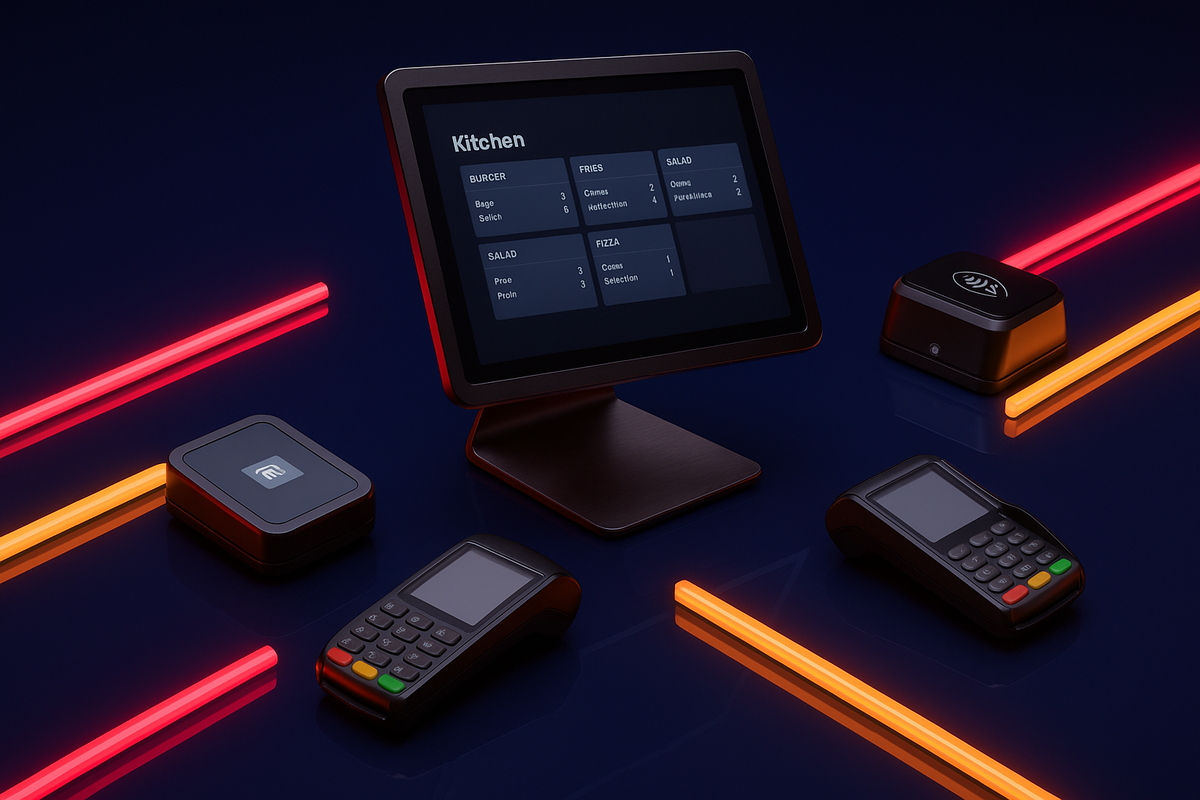
Toast and SpotOn belong on a full-service shortlist. Toast has a built-in kitchen display system, works well offline, and has a deep integration ecosystem for restaurants with complex operations. Chat support is available 24/7, and phone support is available 7 a.m.–midnight ET. Hardware starts at $799 for the Starter Kit standard plan, or $0 upfront on a pay-as-you-go plan, but a basic countertop setup with printer and cash drawer can exceed $1,000. Larger dining-room setups can cost significantly more.
SpotOn has strong analytics, flexible add-ons, and commission-free online ordering, which make it a good fit for independent full-service restaurants that care about both reporting and margins. Its free All-In Plan provides an entry point, with Essentials as the meaningful paid tier. For a 20-seat dining room, the shortlist logic is therefore Toast or SpotOn rather than automatically choosing a platform built around multi-location control.
Clover suits operators who prioritize hardware flexibility and payment processing within the Fiserv ecosystem. Its range extends from countertop terminals to the handheld Clover Flex for tableside ordering, with support for complex check splitting. But the terms need a close look because the price varies by reseller and the contract runs 36 months. Lightspeed is a better fit for multi-location groups or restaurants with a lot of inventory to track, including fine dining where food costs need tight control. Ingredient-level tracking, multi-location sync, and detailed reporting distinguish it, although Premium is a meaningful expense for one location and Starter omits much of that depth.
Plum POS is another option built for restaurants that runs fully in the cloud. It syncs countertop terminals, handhelds, self-ordering kiosks, and kitchen displays, while Order Right places modifier prompts on one screen to reduce rush-hour errors. Its back end includes recipe-level inventory, automated vendor ordering, scheduling, tip pooling, payroll integration, and business intelligence. For budget-constrained independents seeking full-service capabilities, Shift4 DINE and Lavu also belong in the comparison. Lavu is a good fit where paying less upfront and having a choice of iPad-based hardware matter most.
The offline mode and integration questions every operator should test before signing
The next step is to turn shortlist claims into demonstrations. During the demo, test how the system operates during an outage by asking the vendor to turn off WiFi and run a transaction through the restaurant’s intended service flow. If the system fails or becomes cash-only, a restaurant without a backup connection faces a real service risk. Square accepts offline card payments but has functional limits, while Toast and TouchBistro also offer offline capabilities that should be tested against the operation’s needs.
Order Counter combines cloud access with a local server to keep orders flowing during internet outages. SpotOn also makes offline operation a differentiator. Evaluate what the demonstrated system can do without its connection. Support needs the same scrutiny, including whether phone or live chat is available around the clock.
Next, ask to see delivery and accounting connections working. DoorDash, Uber Eats, and Grubhub should connect without manual order re-entry, while an accounting integration should be more than an export-and-import routine. Commission-free online ordering is a separate capability, available on Plum, SpotOn, and Order Counter. It avoids the third-party commission on direct orders rather than merely routing an aggregator order automatically. Confusing those two functions can leave either a labor problem or a margin problem unresolved.
Why guest data capture is the feature most operators undervalue at purchase
Most walk-in guests leave without giving their contact information. The restaurant records a sale, but not necessarily an identifiable person it can reach again through paid marketing. This is where an apparently operational purchase becomes strategic. A system that joins WiFi login, online ordering, reservations, and transactions into one guest profile offers something different from four databases that happen to belong to the same restaurant.
WiFi login creates the largest share of new guest profiles, while online ordering and reservations add names and behavior. POS transactions create the smallest share of new profiles, so using transactions alone misses most guests who could be identified. The register cannot do all the identification work. Connecting those sources with messaging before the first campaign creates the basis for matching a guest’s return visit and check to a campaign touchpoint. It also makes that relationship available for scrutiny.
That scrutiny is essential because a returning guest is not automatically an incremental customer. Some people credited to digital campaigns would have visited anyway, and identifying guests is necessary to investigate that distinction. TouchBistro, SpotOn, Toast, and Square offer loyalty modules, but availability alone does not establish whether a module writes into a unified guest record or requires a manual export from a separate database.
How a POS system becomes the foundation of restaurant marketing attribution
Meta and TikTok report clicks and views, while the POS reports revenue. The operator needs a link between them to reliably tie ads to closed checks. Closed-loop attribution starts with a guest record that ties a person to a purchase. That record must connect to email, SMS, or paid social touchpoints, and the guest-and-transaction data must reach an attribution layer through export or an API without manual re-entry. Sales totals alone cannot show who made a purchase.
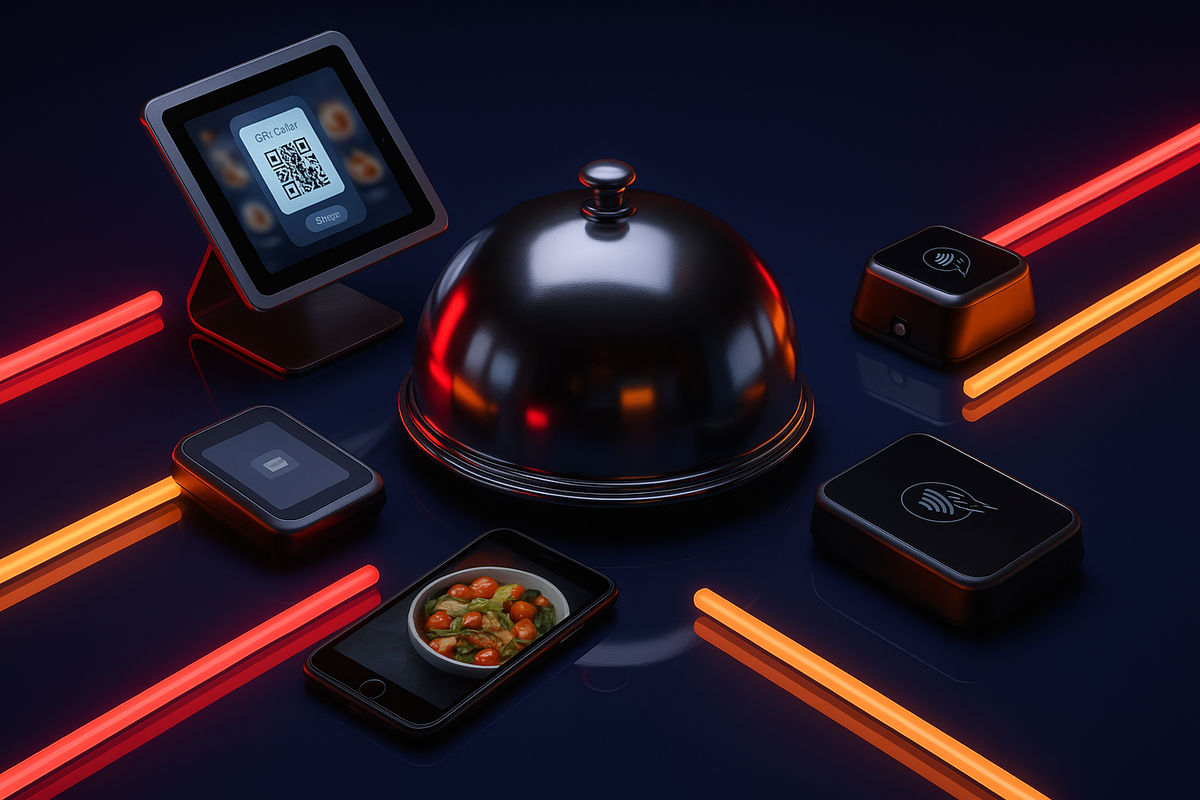
A formal integration is not the only starting point. Unique promo codes or QR codes assigned to campaigns provide a minimum viable method when the POS can apply and record a discount code. The operator can track redemptions, calculate associated revenue, and apply contribution margin to estimate incremental profit. This practical bridge leaves open whether advertising caused a visit, since a regular redeeming a discount may still have planned to come.
Revenue for the campaign timeframe minus marketing spend, food cost, labor, and operational costs yields net profit. Dividing that profit by the sum of marketing cost and food/ops cost produces the return described by those economics. The calculation needs POS revenue tied to a campaign to show the return on that campaign’s ads. A platform’s revenue figure alone cannot do that work.
The returns that platforms report also need three haircuts to reflect how a restaurant makes money. Margin separates revenue from profit, attribution corrects for platforms taking too much credit, and cannibalization accounts for discounted visits that displace full-price purchases. The haircut metaphor is useful because the flattering number usually gets smaller. Transaction data tied to each guest gives the restaurant a way to make those adjustments and check the dashboard’s claims.
The paid advertising channels that depend on good POS data — and what that means for system selection
Interest targeting guesses who might become a customer. POS-sourced guest data starts with people who have visited and spent money, giving Meta and Google a more grounded targeting seed. A system that captures guest details but cannot make them available to marketing restricts both audience building and measurement. Data access belongs in the purchase decision.
Google’s Customer Match uses customer lists that have been uploaded to help target search and display ads. The average cost of a click on restaurant-related search keywords is also below the cross-industry average, so search ads are within easier reach of independents. Paid reach is not the whole picture, however. Google Business Profile is the highest-leverage free channel in the brief’s comparison, with the Local Pack receiving a majority of clicks on local queries. Consistent profile management requires no ad spend, while POS-connected audiences strengthen the paid activity around it.
Meta has food and beverage ad placements at a fairly low cost. Custom Audiences built from guest email lists outperform interest-based targeting because those lists represent people who have already spent money at the restaurant. TikTok is strongest for restaurants with mid-to-high average tickets targeting guests under 35. TikTok and Instagram also allow direct links to online ordering and reservations within their apps. When those ordering systems connect back to the POS, the shorter path to purchase becomes easier to attribute, making that connection relevant to system selection.
How to make the final call — a decision framework for independent operators
Begin with an honest cost comparison across at least two systems over 36 months. Include the costs at the actual monthly card volume, the modules needed, and any hardware financing along with the advertised software fee. Keep contract flexibility visible as a separate constraint. Then match the candidates to service format and growth plans, using Square or SpotOn for low-commitment entry, Toast, SpotOn, or TouchBistro for full service, and Lightspeed or Toast for multi-location complexity. Budget-constrained full-service operators can include Shift4 DINE or Lavu.
Move the surviving candidates into a working demo. Turn off WiFi, run a transaction, check how the system connects to aggregators, and find out when live support is available. Then ask whether data from WiFi, ordering, reservations, and transactions goes into one guest record. Require a clear answer about whether that record can be exported or API-connected to marketing and attribution tools. These questions test whether the system fits both Saturday service and the decisions made after it.
Can the restaurant build targeted audiences, connect campaign spend to closed checks, and prune channels that do not produce verified in-store revenue? No brand wins that test merely by offering more features or more integrations. The purpose is to make spending accountable to the restaurant’s economics. That discipline begins before the contract is signed.