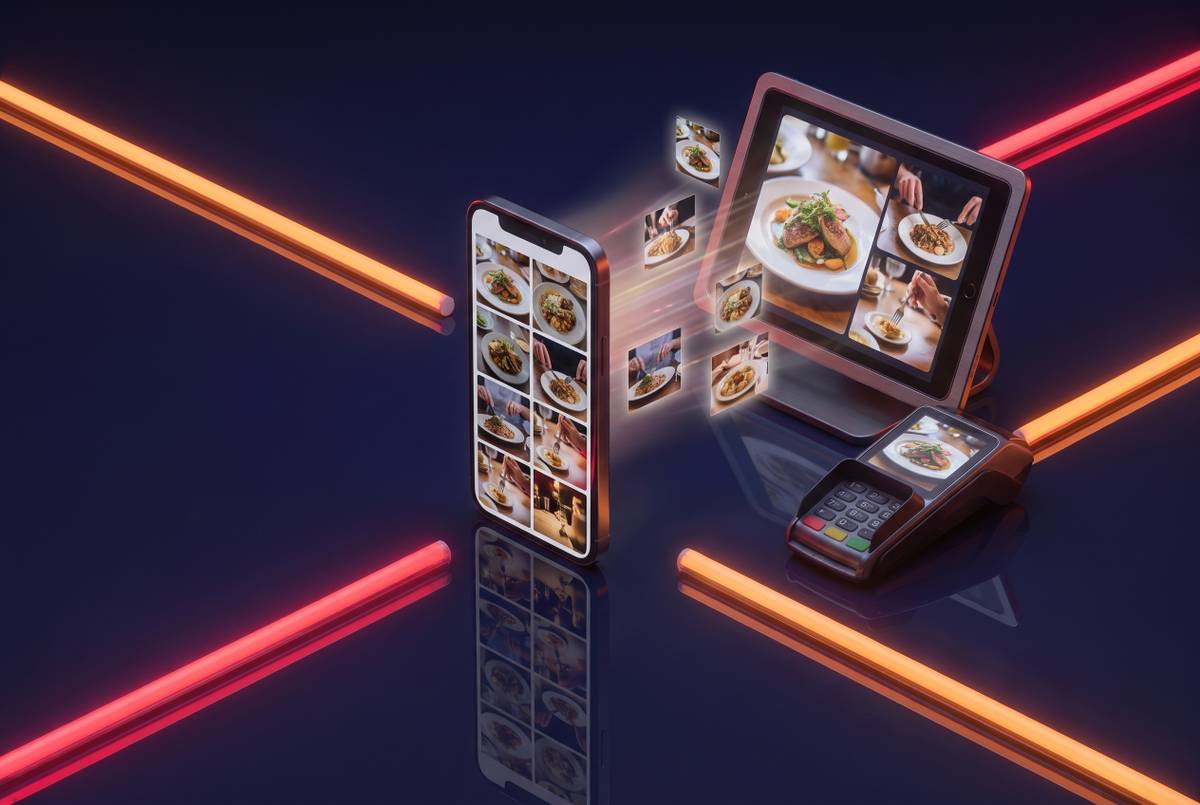
Building a Long Term Creator Program for a Restaurant Brand
Local creators build repeat revenue better than one-off influencer bookings ever will.

Restaurant marketing keeps chasing a spike instead of building a floor. Book a creator, get a post, watch covers tick up for a weekend, then start from zero again next month. This piece looks at why that pattern keeps failing operators, and what it actually takes to turn local creators into something closer to permanent infrastructure than a rotating cast of one-time hires.
Why the one-off campaign model keeps failing restaurant marketers
The default playbook, more or less unchanged since a major photo-sharing platform made "influencer" a job title, works like this: find a creator, negotiate a post, watch a short bump in traffic, then repeat the entire process from scratch for the next one. No file gets built. No pattern gets studied. Each booking is treated like a first date that also happens to be a last date, which is a strange way to run anything meant to drive repeat revenue.
The transactional nature of it is the real cost. A restaurant that works with the same creator four times across a year could, in theory, learn which menu item that person's audience actually orders, which day of the week their post drives walk-ins, whether their followers skew lunch or dinner. Treat every booking as disposable, though, and none of that knowledge accumulates. The relationship resets to zero every time, so the operator is permanently stuck relearning lessons that a program would have already banked.
Then there's the measurement gap, which makes the whole thing worse than just inefficient. A given platform will report views, likes, saves, maybe link clicks. The POS system reports covers for the night. Nothing in between connects those two data sets, so when a creator's post goes up and the restaurant has a busy Saturday, nobody can say with any confidence that the creator caused it rather than the rain keeping everyone local that weekend. Correlation gets treated as proof because there's no better option on the table.
That gap used to be tolerable when organic reach was cheap and abundant. That gap used to be tolerable when organic reach was cheap and abundant, but it is not tolerable anymore. Widely cited platform trend data shows organic reach across major platforms has dropped by 40% or more as algorithms shift toward paid and creator-amplified content. The free ride that used to cover for sloppy measurement is mostly gone. Wasting a creator budget on a campaign nobody can actually evaluate is a bigger loss now than it was five years ago, because there's no organic safety net catching the difference.
Structural advantages of local creators over general influencers for in-store revenue
Restaurant marketing has one advantage that most other industries don't get, and it's almost embarrassingly simple: the customer has to physically show up. That single fact changes the entire calculus of who's worth paying. A creator with two million followers scattered across nine time zones is nearly useless for driving Tuesday lunch covers. A creator with a modest following who all live within a fifteen-minute drive is doing exactly the job a restaurant needs done. Geography beats follower count, full stop.
This is why micro-influencers, generally defined as creators in the 10,000 to 100,000 follower range, consistently outperform larger accounts on foot traffic goals even though they'd lose badly on a pure reach comparison. Brand awareness campaigns want scale. Foot traffic campaigns want proximity and trust, and those two things don't scale the same way follower counts do.
The data backs this up on both the cost and the attention side. Roughly 73% of brands say they prefer working with micro and mid-tier creators over larger accounts. And the engagement numbers themselves show why: micro-influencers post engagement rates in the range of 6.15% to 6.76%, compared to 1% to 2% for larger accounts. That's not a small gap: it's a difference of roughly four to six times the audience response per post. An account with a modest following and a strong engagement rate is putting an actual, attentive, physically-nearby audience in front of a restaurant's next special. An account with a massive following and a engagement rate far thinner is putting a large number of people who might live in some far-off market in front of it. One of those is a marketing asset. The other is a vanity metric with good lighting.
Creator programs versus creator rosters
A roster is a spreadsheet. A program is a system, and that difference means a program has defined roles, expectations, and continuity that a roster lacks. A roster is just a list of people a restaurant has worked with before, sorted by nothing in particular, revisited only when someone remembers to open the file. A program has defined roles, expectations set in advance, and a feedback loop built into the calendar rather than left to chance.
Structuring that program starts with tiers, because not every creator relationship should look the same.
Anchor creators sit at the center: two to four local micro-influencers with proven audience overlap in the restaurant's actual trade area, given repeat access and folded into the restaurant's seasonal calendar. These are the people who get the new menu preview before it launches, who know the slow Tuesday needs a push, who've been in the space enough times to shoot it without direction.
Amplifier creators form a rotating layer around that anchor group, brought in for specific launches, dayparts, or seasonal pushes. They're briefed on goals and tracked against defined KPIs just like anchors, but they're not embedded in the same way, and that's by design. They exist to widen reach around a specific moment, not to build a running relationship.
UGC contributors round out the structure: actual customers turned occasional content producers, incentivized with in-restaurant rewards (a free appetizer, a discount code, whatever the math supports) in exchange for a post. It's the lowest-cost tier and, somewhat ironically, often the highest-trust one, since audiences tend to read customer content as more honest than anything visibly sponsored.
The industry is already moving this direction at scale. A 2026 trends report found that 74% of brands are shifting budget into creator programs as core strategy rather than one-off experiments, which says something about where the category is heading generally: toward infrastructure, away from ad hoc buys.
Compensation should match that shift. A hybrid structure, a base fee plus a performance commission in the 10% to 15% range plus tiered bonuses tied to actual results, aligns what the restaurant pays with what the creator delivers, instead of just paying for impressions and hoping the rest works itself out.
Measuring creator content and connecting it to in-store revenue
Four categories cover the guest funnel from a scroll to a seated table, and a program that's only tracking one of them is flying with half the instruments dark.
Awareness is reach and impressions, the top of the funnel, the easiest numbers to get and the least useful ones on their own. Engagement (saves, shares, comments) says more, since saving a post or sharing it with a friend is a much stronger intent signal than a passive scroll-past view. Conversion covers reservation clicks, order link visits, promo code redemptions, the moment interest turns into an action. Revenue is the number that actually matters to the operator: attributed covers and average check tied back to a specific piece of creator content.
That last connection, tying revenue to a specific creator, is where most programs fall apart, and it's also the part with the simplest available fix. A unique promo code per creator ("SARAH20," say) requires no new technology and no integration work, just a code entered at checkout or on an order platform, and it tells the restaurant exactly which creator drove which visit. It's blunt, but blunt and functional beats sophisticated and untracked.
For programs that want more resolution than a promo code offers, QR check-ins, loyalty program tie-ins, and UTM-tagged links in a creator's bio all add layers of attribution on top of the basic code system. None of them are mandatory, but each one narrows the gap between "a post went up" and "a table got filled."
Platform-native tools like Meta Pixel tracking on a reservation confirmation page, or Google's store visit estimates, offer a useful baseline too. Those numbers are self-reported by the platforms selling the ad space in the first place, so treating them as the full picture rather than one data point among several is a mistake. Directional, not definitive.
Compounding value of reusable creator content
Most restaurants treat a creator's post like a firework: it goes up, it's beautiful for a second, then it's gone and nobody thinks about it again. That's a waste of a paid asset, and it's the single easiest inefficiency in the entire model to fix.
A well-shot creator video, the kind that took real effort to light and frame and edit, doesn't have to die after one posting cycle on a given platform. The same clip can become paid social creative, content on an in-restaurant screen, an image in an email campaign, a testimonial-style clip on the restaurant's own website, all without paying for a second shoot. One production cost, four or five distribution channels. Repurposing content this way multiplies the value of the original spend, though it only works if the usage rights get sorted out before the content goes live, not after. Asking for permission after a creator has already posted, which is a common approach, puts the restaurant in a weaker negotiating position than locking in broad usage rights as part of the original agreement. Negotiate that upfront, and the content becomes reusable on demand instead of something the restaurant has to go ask permission for every single time.
A slower compounding effect appears in search rather than in social feeds. A growing library of creator content and customer-generated photos feeds Google fresh, experience-based material tied directly to the restaurant's name: 70% of consumers check a restaurant's online menu photos before deciding to visit. That's a conversion decision happening before the guest ever opens a reservation app, based entirely on whatever image library appears when they search. A program that keeps producing content isn't just filling this week's feed, it's stocking the shelf that future customers browse before they've even picked up the phone.
Running the feedback loop: how to review performance and improve the program
A program that never updates based on what actually worked is just a series of campaigns wearing a program's clothing. The feedback loop makes the difference real, and it needs a cadence, not a vague intention to "check in sometime."
Monthly, at the creator level: which codes got redeemed, which specific piece of content drove reservations, which creator's Tuesday post actually moved Tuesday covers. This is granular and a little tedious, and that's fine, because it catches problems early instead of letting them compound across a whole quarter.
Quarterly, at the strategic level: which creators earn expanded access, which get rotated out, which dayparts or menu items deserve more attention next cycle. This is the zoomed-out view, the one that asks whether the anchor tier still makes sense or whether one of last quarter's amplifiers has quietly outperformed everyone.
Infrastructure beats one-off campaigns, and scalable systems for sourcing, tracking, and paying creators drive more predictable growth than relationships managed from memory and a rolling contacts list. Memory is not a system. A spreadsheet someone updates when they remember to isn't either.
What a proper review actually produces isn't complicated. A ranked list of creators sorted by attributed revenue, not by engagement rate alone, since the two don't always point the same direction. A content performance log tracking which formats, short video against static photo against another vendor's short-lived post format, actually drove reservation clicks or code redemptions. And an updated brief for the next cycle that folds in what worked and adjusts emphasis toward the menu items, dayparts, or messaging that the data says deserve it.
None of this requires guessing. It requires paying attention to the same numbers month over month, and letting them actually change what happens next, which is a lower bar than it sounds and a higher one than most restaurant marketing programs currently clear.