Encouraging Customers to Create Restaurant Content
User-generated content builds more trust than polished restaurant marketing.
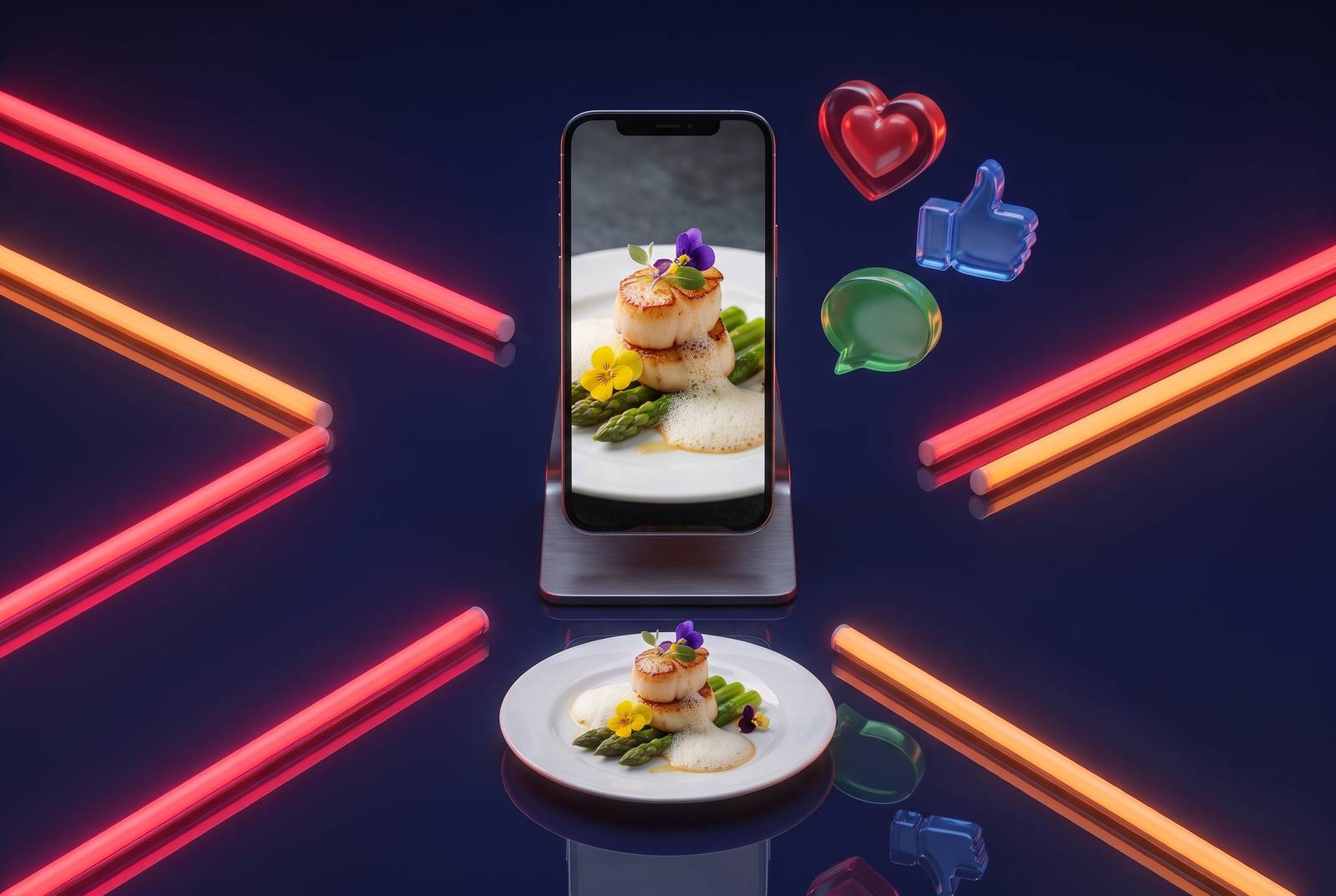
In 2023, creators put out more than 1.2 million posts about food and beverage brands, and those posts racked up 75 billion impressions and 3 billion consumer interactions. Most of that volume didn't come from paid talent or agency shoots. It came from regular people at regular tables, holding up regular phones, and that single fact should reorganize how restaurants think about content. The wrong move, the one most operators still make, is chasing viral reach: a single video that spikes to 2 million views and then means nothing three days later. The right move is chasing repeat, low-friction documentation from people who already showed up, because that's the behavior that compounds instead of evaporating.
Start with trust, since it explains everything downstream. Research has found that 84% of consumers trust user-generated content more than traditional advertising, and user-generated posts see engagement rates roughly 28% higher than branded content on the same platforms. A polished restaurant photo, shot with a ring light and cleaned up in an editing app, tells a viewer "this is how we want you to see us." A shaky video of someone's actual dinner, filmed mid-bite with a thumb half in frame, tells a viewer "this is what happened." Audiences read the difference instantly, the way anyone can tell a real laugh from a performed one. A restaurant can buy reach with a media budget, but it can't buy a stranger's genuine "wait, what IS that" reaction, because the moment someone tries to manufacture that reaction, it stops being one.
A hyperlocal angle also makes this more than a vanity metric. Something like 74% of people use social media to help decide where to eat, and 68% check a restaurant's social presence before ever walking in. Customer content, by definition, comes from someone who was physically in the room, in the neighborhood, ordering off the actual menu. That's the audience a restaurant needs: people close enough to visit tomorrow, not people three time zones away scrolling for entertainment between meetings. So the organizing question for the rest of this piece is simple to state and harder to execute. If customer content is more trusted and more locally relevant than anything a restaurant produces in-house, what does it actually take to get customers to make it, reliably, without turning the whole operation into a content mill?
What makes a moment worth filming, the psychology behind the impulse to share
People don't film their food at random. Three motives tend to show up in the research on why anyone posts anything. Social currency proves you have good taste or found something first, emotional payoff delivers delight or surprise or the occasional "no way" reaction, and belonging signals membership in a scene, a city, a food culture. Design a moment that hits one of those, and filming happens on its own, no coaxing required.
Surprise is the cheapest lever available, and most menus don't use it. A technically gorgeous plate that matches its menu photo exactly gets a nod and a fork. A dish that arrives on fire, or gets poured tableside, or shows up in a coconut instead of a bowl, gets a phone in the air before the server has even walked away. The dish doesn't need to outclass the one next to it on the menu. It needs to violate the expectation slightly, the same way a magic trick works less because of the object and more because of the moment the object shouldn't be there.
Scarcity does similar work. A limited-run item, something only available for six weeks or only whispered about by staff, creates urgency: document it now, because it won't be here later. The social proof loop is almost embarrassingly simple, too. A diner who watches the table next to them filming often feels the pull to do the same, no prompt required. The room normalizes the behavior before a restaurant ever says a word.
Friction kills all of it, and this is the part most owners underestimate. Dim lighting, a cluttered table, a dish that cools and wilts before anyone can angle a shot: all of that snuffs the impulse before it starts. Restaurants aren't asking customers to do marketing labor. They're clearing the small, dumb obstacles standing between a customer and something that customer already wanted to do anyway.
Physical design choices that make content creation happen without asking
Lighting is the single highest-leverage variable in the building, full stop, and it's the one most owners under-invest in relative to its payoff. Warm, even light, whether from windows or the right bulb temperature, makes food look appetizing on a phone camera without the diner lifting a finger. Harsh overhead fluorescents suppress sharing just as effectively as a room so moody it reads like a cave. Neither produces an image anyone wants attached to their name, which is the whole test.
Beyond lighting, a restaurant benefits from a designated visual moment somewhere in the room, such as a mural, a neon sign, or a distinctive wall near natural light. Give people a frame, and they'll use it. It also functions as a location tag with no geotagging required, since anyone who's seen the wall before knows exactly which restaurant that photo came from.
Plating matters differently on a screen than it does at the table. Height, color contrast, texture variation, and a bit of negative space on the plate all translate well to a five-inch rectangle. A dish that's stunning in person can photograph completely flat if it's all one color and low relief, which is worth remembering the next time a chef insists a monochrome dish "tastes better than it needs to look." Tastes better for whom, exactly? Not for the phone.
What might be called the table-ready environment includes cleared surfaces, tableware that photographs well, a napkin color or menu card that belongs to the restaurant's aesthetic. None of this requires the customer to do anything. It just shows up in every photo by default, which is the point.
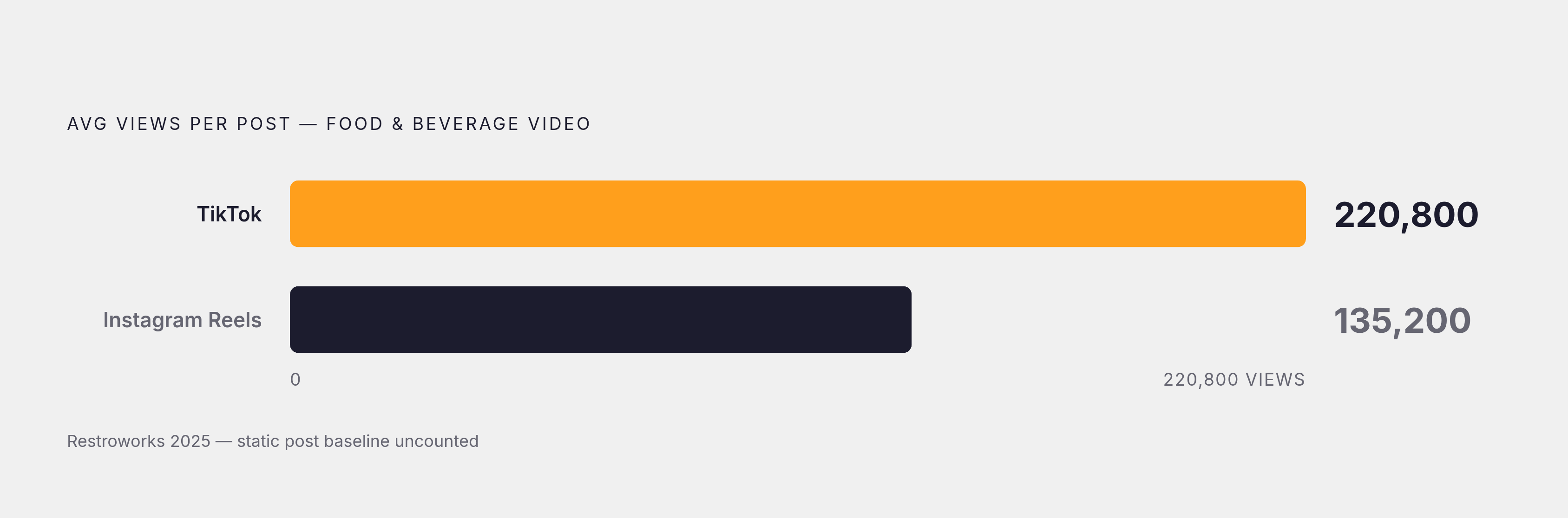
Presentation theater deserves its own mention, because it separates a photo moment from a video moment, and video is where the real numbers sit. Tableside sauce pours, smoking effects, dramatic reveals: these turn a static photo into thirty seconds of footage. TikTok food and beverage videos average around 220,800 views per post; Instagram Reels average around 135,200, according to Restroworks' 2025 industry data. A restaurant that only optimizes for the still photo is leaving the bigger number sitting right there on the table.
Menu and product design as a content trigger
Every menu needs at least one dish engineered to be remarkable on camera. Not necessarily the most profitable item, and not necessarily the most popular one either. Call it the hero item: the dish built to make a stranger stop scrolling.
What makes something shareable tends to repeat across categories: unusual color, dramatic scale (absurdly large or improbably tiny), an interactive or build-it-yourself component, or a sound element like sizzling or cracking that rewards video over a still. Limited-time and seasonal items compress all of this into a burst. A pumpkin dish that exists for six weeks generates more urgent documentation than a permanent menu item ever will, because scarcity does the marketing on its own.
Naming matters more than most menus give it credit for. "The chicken sandwich" gives a customer nothing to caption. A dish with a specific, memorable name gives the customer a ready-made caption and gives the restaurant a searchable term, so when people tag it, the content becomes findable rather than scattered across a hundred generic captions.
Off-menu items work on a slightly different psychological lever: exclusivity. Posting about a secret menu item signals insider knowledge, and the post itself becomes proof of that status. Beverages, meanwhile, are the underused lever nobody talks about at the menu meeting. Color-changing cocktails, layered pours, garnish-heavy builds: these photograph and video as well as food, often at a fraction of the cost of goods. Any new menu addition should get evaluated on three criteria, not two: food cost, flavor, and whether it has any content potential at all. Skip that third one, and the menu quietly fills up with dishes nobody will ever film.
In-restaurant prompts that invite sharing without feeling like a demand
Tone is where most restaurants trip, and it's usually the same mistake. A table tent screaming "TAG US FOR A CHANCE TO WIN" reads as transactional, and it cheapens whatever genuine moment the customer was about to have anyway. Compare that to a small line that says "this is the dish everyone's been filming lately." Same intent, opposite effect. One demands. The other invites curiosity, and curiosity is what actually gets a phone out of a pocket.
Staff are the first and best prompt available, and they cost nothing extra. A server who mentions, almost in passing, "the sauce pour is the moment to catch" has told a customer exactly when to film without it ever sounding like a marketing ask. It sounds like a tip from someone who's seen a hundred tables do this before, because the server probably has.
QR codes can work here too, pointing to a gallery of how other diners have shared their visit. That's a suggestion rather than a demand, a reference point that implicitly invites the customer to add their own frame to the collection. Hashtags need to be short and specific: generic tags like #foodie get buried in an ocean of identical posts, while a hashtag tied to a restaurant's name or a signature dish builds a findable, ownable archive over time.
The receipt is a surface most operators ignore, and it's sitting right there in every check presenter. A note on the check or a stamp on the takeout bag can prompt sharing after the fact, catching diners who never thought to film mid-meal but might post from the couch that night. What to avoid is anything that reads like a legal notice: mandatory opt-ins, consent language, anything that frames the ask as benefiting the restaurant rather than the customer doing the posting.
Incentives and recognition programs that sustain the behavior over time
Reciprocity is nearly free and it compounds. When a restaurant reshares a customer's post with credit, that customer feels seen, and the data on repeat behavior suggests they're more likely to create again on the next visit. It costs a restaurant nothing but a few seconds and a screenshot, which makes the operators who skip this step genuinely hard to understand. It's the easiest line item in this entire piece to act on, and somehow the most skipped.
Small tangible incentives help too. A complimentary dessert, a modest discount, or a free appetizer for a tagged post can move the needle. The size of the incentive matters less than the ease of claiming it. It needs to be operationally simple enough that a server can offer it without checking with a manager, and meaningful enough that the customer tells a friend about the exchange, not just the meal.
There's a compounding math problem worth sitting with here. Available data suggests that 60.7% of potential customers need to see a social post two to four times before making a purchase decision. One customer posting repeatedly from the same restaurant is a compounding return. It's a repeated impression, and each additional post from a familiar face nudges someone closer to booking rather than further from it.
Some customers will post every single visit without being asked, simply because they enjoy it and feel some ownership over the discovery. Call them creator regulars, and treat them differently than the walk-in crowd. Identifying them early, and giving them something like early access to a new menu item or an invite to a soft opening, turns incidental behavior into something closer to a reliable content pipeline. Offline recognition matters just as much. A printed card, a note from the chef, or a server saying "saw your post, that sauce pour looked great" closes the loop between what happened online and what happens at the table.
Restaurants don't need a sophisticated tracking stack to start paying attention here. Even watching which tagged posts generate comments like "I need to go here" versus posts that just collect likes tells an operator which content types are actually converting attention into intent. The retention math backs up why this matters: industry churn runs around 78.8% annually, costing a location something in the neighborhood of $375,380 in lost opportunity each year. Customers who post are, almost by definition, more engaged, and engagement correlates with coming back rather than drifting to whatever opened down the block.
Digital triggers that extend the content moment beyond the dining room
A restaurant's own Google Business Profile and Instagram feed function as a silent benchmark, whether anyone intends that or not. If the restaurant's own photos look better than what a customer could capture on a phone, customers try to meet that bar. If the restaurant's own photos look mediocre, the implicit message is that the food doesn't look good, which is a strange thing to communicate about your own dining room without meaning to.
A short post-visit email or text does a surprising amount of work: "glad you came in, if you got any photos we'd love to see them," with a handle or hashtag attached. It's low-friction because the diner already opted in by walking through the door in the first place.
Reposting strategy deserves more thought than most restaurants give it. Every time a restaurant reposts a tagged, credited piece of customer content, that original poster's followers see the restaurant's account, often for the first time. One customer's audience becomes a discovery channel for the restaurant, at zero media cost. Stories versus feed posts matter here too. A Story repost is ephemeral and low-stakes, easy for a customer to feel good about without much pressure. A feed repost carries more weight, and for some customers, becoming "featured" on a restaurant's actual grid turns into an aspirational goal that shapes their next visit.
Timing isn't infinite, either. Something like 55% of TikTok users say they visit a restaurant after seeing its menu on the platform, and the gap between "saw the content" and "showed up" tends to be short. Post-visit prompts that land within 24 hours, while the meal is still fresh in someone's memory, catch people at their highest willingness to share. Wait a week, and the moment's gone cold, the same way a joke stops being funny once you have to explain the setup.
Bigger campaigns can stitch individual posts into something collective: a theme like "show us your first bite," a seasonal challenge, a tie-in with a neighborhood event. Individual posts start to feel like part of something larger than one dinner, which multiplies their reach beyond what any single post could manage alone.
How customer content feeds paid distribution, and why that combination outperforms either alone
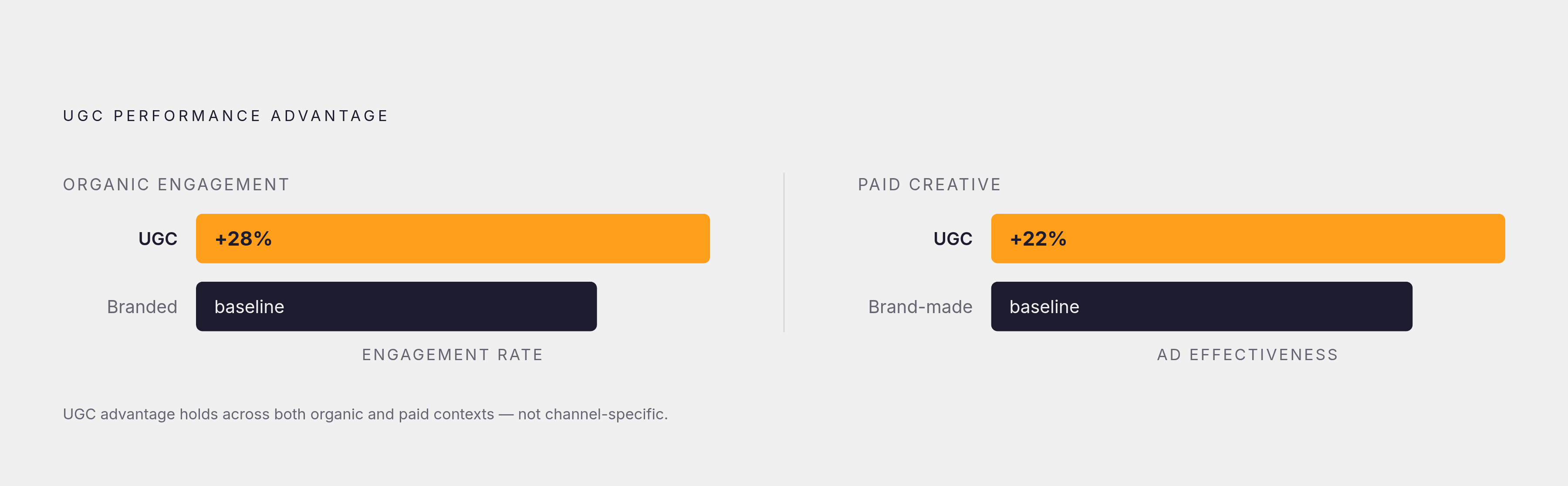
Customer content doesn't have to stay organic, and treating it as a one-way channel is where most operators leave real money on the table. Used as paid creative on Meta and TikTok, it consistently beats polished branded ads. TikTok's own data pegs user-generated content as roughly 22% more effective than brand-produced content as of 2025, and Instagram posts built around user content see engagement around 70% higher than posts without it.
Why does this work in paid media specifically? Audiences have gotten good at recognizing an ad when they see one, and their skepticism drops the moment something looks like it came from a real person's phone rather than a studio. A video that got 500 organic views can, with a modest paid boost, reach tens of thousands of additional viewers.
The local targeting piece compounds this further. Content made by real diners in a specific neighborhood, boosted with geo-targeted paid spend, reaches people who can physically walk through the door that night. Something like 52% of consumers say they're likely to act on influencer content about food and drink, and that number climbs further when the content is geographically close to home.
But how does this affect measurement? Here's where most restaurants run into a wall, and it's a wall built entirely out of their own reporting dashboards. Meta and TikTok's native reporting hands back clicks and views, not covers. Platforms report what happened on the platform; they say nothing about what happened at the point of sale. Without connecting a specific ad, and specifically which piece of customer content it used, to an actual transaction, a restaurant can't know whether its best-performing organic post by likes is also its best-performing revenue driver. Those two things can diverge sharply, and this is the mistake worth naming directly: treating likes as a proxy for sales means funding content that photographs well but doesn't fill a single seat.
Operators without a full attribution system in place aren't stuck, though. Tracking reservation source where possible, using unique promo codes tied to specific pieces of content, and watching foot traffic in the days following a post that gets real organic traction amount to imperfect but directionally useful steps while building toward something closer to closed-loop measurement.
Working with customers who already behave like creators, and when to formalize the relationship
Some customers cross a line without anyone drawing it. A diner who's posted twice, gotten reshared once, and brought friends along on the third visit is already behaving like a local creator, whether the restaurant has noticed or not. That relationship will either stay informal or gain some structure, and the decision shouldn't default to whichever option requires less paperwork.
Smaller influencers, generally those with a modest local following, are often already regulars at a restaurant before anyone thinks to formalize anything. Partnerships at this level can run on complimentary meals or modest fees, and because their audiences are hyper-local by definition, a well-matched creator can drive meaningful foot traffic in the days following a post covering 2024 and 2025.
Micro influencers, roughly 10,000 to 100,000 followers, show a different pattern: their posts drive about 20% more conversions than posts from macro influencers, and something like 82% of customers say they're more likely to act on a micro-influencer's recommendation than one from a bigger name. Which raises an obvious question. Why would a smaller account outperform a larger one? The geography test answers it. A creator with 40,000 genuinely engaged followers in the same metro area will almost always beat a national creator with a much bigger, but scattered, following. Audience location is the qualifying criterion here, not follower count, and it bears repeating because it cuts directly against the instinct to chase the biggest number on the follower count.
Chasing follower count for a local restaurant partnership is close to a wasted line item in the budget. It's the mistake to name: the point isn't bigger, it's closer. Vetting a potential local creator doesn't require much beyond attention. Look at who's already tagging the restaurant, and check whether their followers seem local, via location tags on other posts or references to neighborhood events. Weigh engagement rate over raw follower count, since a smaller, tighter audience usually converts better than a larger, looser one.
The Dallas-founded Southeast Asian chain Malai Kitchen offers a clean example of the geography principle in action. Its collaboration with local influencer "Dallas Food Nerd," whose audience sat almost entirely within the Dallas/Fort Worth metro, demonstrates that geographic match, not audience size, is what determines whether a partnership drives actual foot traffic or just a spike in impressions that don't convert to anything.
Formalizing a relationship doesn't need to look like a legal document and a content brief. It can start with a genuine meal, a personal message that references something specific the creator has already made, and a simple, direct ask, nothing that turns an authentic local voice into a scripted brand spokesperson. Whether the relationship stays informal (a regular who just happens to post) or turns into something structured (a paid local partnership), the same question from earlier in this piece still applies: which posts actually drove people through the door, and how would anyone know that without checking? Operators who build that question into the program from day one are the ones positioned to keep funding what works, and quietly stop funding what only looks like it's working.